Where Greenbank Sits
Greenbank is a Logan City suburb roughly 28 kilometres south of the Brisbane CBD, bordered by Boronia Heights, Regents Park, and the Greenbank Military Reserve. It's one of the last semi-rural pockets left in this part of the Logan corridor — blocks here regularly run from standard suburban parcels up to several acres, a lot profile that has all but disappeared from suburbs closer to the city.
The suburb sits within the broader Logan growth corridor and is well served by the Mount Lindesay Highway, giving reasonably direct access north to Brisbane and south to the Gold Coast hinterland. Greenbank State School anchors the local family community, and the adjacent Army Barracks (Greenbank Training Area) has historically supported a stable defence-adjacent rental and buyer pool.
Market Position
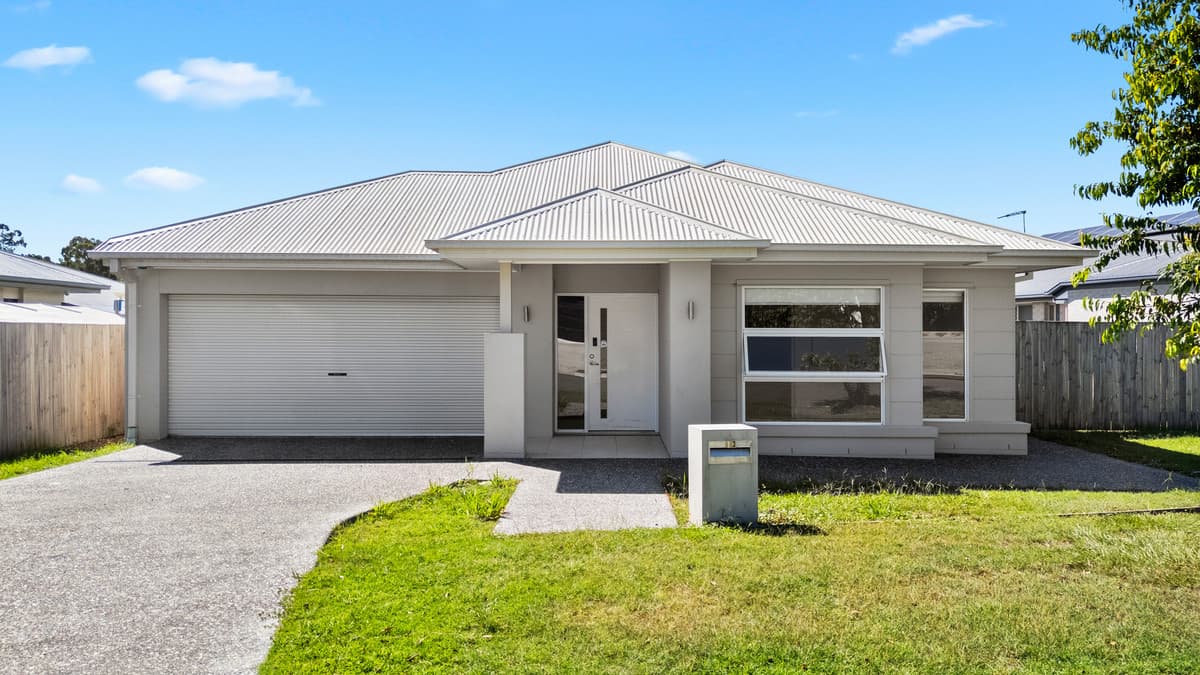
Greenbank's median house price sits around $860K in 2026 — a step up from more established, smaller-block Logan suburbs like Kingston ($685K) because of the land-size premium buyers pay here. Our recorded 2026 sale, 13 Skyring Street ($800,000 for a 4-bed/2-bath home on a 582 sqm block), sits close to that median and reflects standard-lot rather than acreage-style stock.
Twelve-month growth of roughly 10.5% has outpaced the Brisbane metro average, driven by families being priced out of standard-lot Logan suburbs and chasing space instead. Rental yields around 4.0% run slightly below suburbs like Kingston or Slacks Creek because Greenbank's land-heavy price point doesn't scale rent proportionally — but vacancy at 1.3% shows demand remains firm.
What Buyers Like
Space is the whole pitch. Where a same-budget buyer in Brisbane's inner-south is looking at a unit or a small-lot townhouse, Greenbank still delivers a standalone house with a real yard — and in many pockets, genuine acreage. For families wanting room for sheds, trailers, horses, or simply distance from neighbours, there are very few Logan-adjacent alternatives left at this price point.
The Greenbank Training Area and broader defence presence also gives the suburb a structurally different tenant and buyer base to most SEQ suburbs — a mix of ADF families rotating through postings and long-term acreage owners, both of which support steady, less speculative demand.